Honoring Hawai‘i: Land, People, and Power with Purpose
communities. We uplift local voices and ancestral wisdom to shape an energy future rooted in aloha ʻāina.
About Geothermal
GEOTHERMAL: AN INTRODUCTION
Critical to Hawai‘i’s sustainable energy future, geothermal energy – or heat within the earth – is a natural renewable resource because it is continuously being produced due to the gradual decay of radioactive particles in the earth’s core. The temperature of the earth’s core is as hot as the surface of the sun, and rocks and water closer to the surface absorb heat from magma deep underground, according to the U.S Energy Information Administration.
Geothermal energy is common around volcanic activity and tectonic plates in the Pacific, where hot magma is found near the earth’s surface. We can safely harvest geothermal energy when wells reaching deep into volcanic rock tap steam from reservoirs of geothermal fluid, which is used to turn turbines and generate electricity. In Hawai‘i, geothermal energy is an indigenous resource owned by the public and Native Hawaiians.
GEOTHERMAL ENERGY IN HAWAIʻI
Geothermal energy is a treasured natural resource in Hawaiʻi. A treasure beneath our feet that holds the power to power our homes, sustain our communities, our businesses, and our future. This energy comes from deep within the Earth, where heat is constantly generated by natural processes. The temperature at the Earth’s core rivals that of the sun’s surface, and this intense heat radiates outward, warming underground rock and water. In volcanically active regions like Hawaiʻi, this heat rises closer to the surface, creating ideal conditions for energy production.
By tapping into our underground steam and hot water through deep wells, we can turn this natural warmth into clean, reliable electricity. It’s a process that leaves a small footprint but delivers lasting impact providing energy day and night, no matter the conditions.
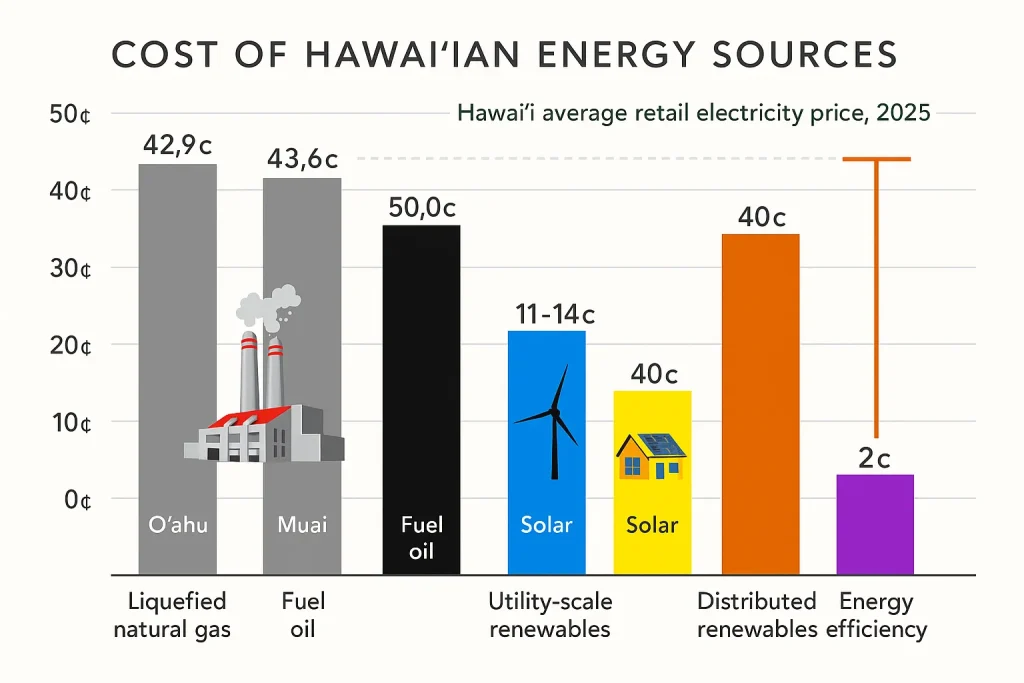
What makes geothermal energy in Hawaiʻi truly special is that it is ours. It’s an indigenous resource, rooted in the land and held in trust for the people of Hawaiʻi, including Native Hawaiian communities. Unlike imported fuels, that is way expensive and pollutes our land, it doesn’t come from faraway places. It comes from this ʻāina, from the very foundation of these islands. This is our future built on sustainability and self-reliance,
HAWAIIAN CULTURAL APPROACH
HAWAIʻI'S RENEWABLE PORTFOLIO STANDARDS
The Hawai‘i Clean Energy Initiative (HCEI), launched in 2008 through a partnership between the State of Hawai‘i and the U.S. Department of Energy, aims to achieve 100% renewable electricity by 2045. Over the years, Hawai‘i has become a national leader in clean energy innovation, driven by its unique island environment and high dependence on imported fossil fuels. The state has already surpassed its 2020 Renewable Portfolio Standard (RPS) milestone and is on track to meet its 2030 target of 40% clean energy. Major accomplishments include the retirement of the state’s last coal plant, the rapid expansion of solar and battery storage systems, and increased investment in wind, geothermal, and hydrogen technologies.
Under Governor Josh Green’s Executive Order 25-01, issued in 2025, the state reaffirmed its commitment to a just and equitable transition to clean energy, prioritizing benefits for low- and moderate-income communities. The Hawai‘i State Energy Office continues to lead efforts that integrate renewable energy into the grid, promote energy efficiency, modernize infrastructure, and reduce greenhouse gas emissions across sectors. These efforts are not only vital to Hawai‘i’s climate resilience and energy independence, but also serve as a global model for islanded energy systems.